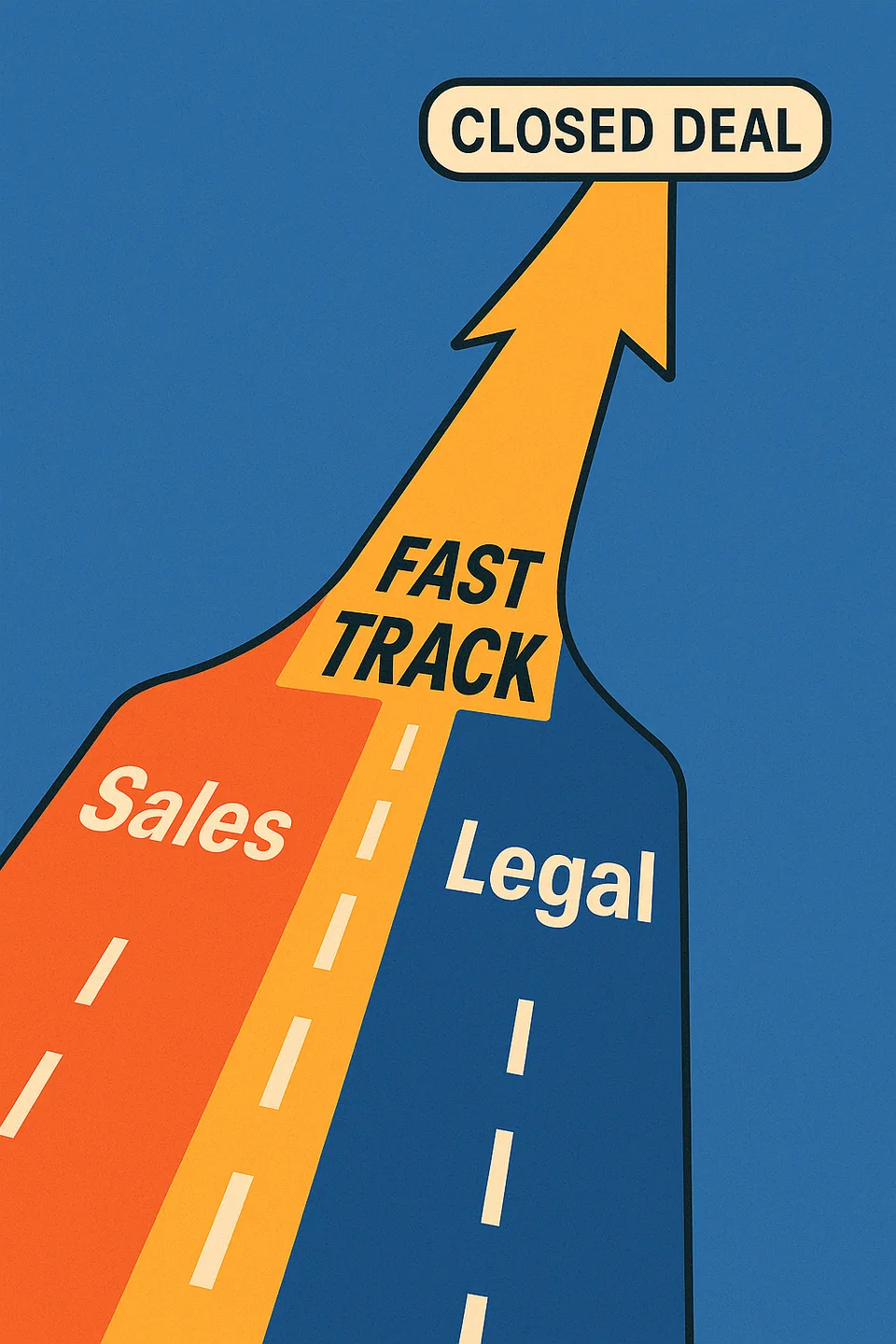
Sales and legal teams don’t have to be adversaries. The tension between them is almost always a process problem, not a people problem. Fix the process and deals close faster — without anyone working harder.
Add a Cover Page
Include a cover sheet with your Master Service Agreement that describes what your company does. Contract reviewers often lack the context that came out of discovery calls. Without it, legal has to guess at risk — and guessing conservative is always the default.
A one-page summary of the deal — the product, the customer, the commercial terms — lets legal skip the orientation and get straight to review. That alone can cut a day off the cycle.
Call Before You Redline
Before diving into document revisions, schedule a short call between the legal teams. This sounds counterintuitive — a call takes time, redlining takes time, surely you’re adding steps? You’re not.
A 20-minute call where both sides agree on the major issues reduces review cycles dramatically — sometimes from weeks to just days. It also helps sales predict timelines and identify blockers before they become emergencies.
Clear Ownership and Escalation Rules
Every commercial term should have a designated owner. When it doesn’t, everything escalates to legal, and legal becomes the bottleneck by default.
A simple ownership framework:
- Sales manages business terms: duration, pricing, renewals
- Legal handles legal provisions: jurisdiction, IP ownership, liability caps
- Hybrid items require cross-functional approval
Build a pre-approval matrix specifying who can authorize exceptions to standard positions. When sales knows they can approve a payment terms change without legal sign-off, they don’t wait — and the deal doesn’t wait.
A Quarter-End Execution Playbook
Quarter-end is predictable. It shouldn’t be chaos. When contracts arrive in the final days of the quarter, the process should follow a set sequence:
- Sales rep submits document with business context
- Sales leadership prioritizes by urgency and deal size
- Legal performs a same-day assessment of timeline and approval needs
- Legal syncs with sales before responding to customers
The overarching message: treat deadline pressure as predictable rather than crisis-driven. A playbook doesn’t prevent the pressure — it means the pressure doesn’t slow you down.